

Healthcare application development looks like software development from the outside. The tools overlap, the patterns are familiar, and the code isn’t obviously different. Behind that surface, it operates under a different set of obligations that shape every architectural decision you make, from how you store a phone number to how you log a database query.
Patient data exists within a regulatory framework that defines exactly who can access it, how it must be protected, and what happens when it isn’t. Getting this wrong isn’t an inconvenience. It’s a liability that can end a company, and it’s one that surfaces late in the development cycle if compliance wasn’t part of the original architecture.
This guide covers what development teams need to understand when building applications that handle protected health information: HIPAA compliance fundamentals, healthcare tech stack selection, wearable data integration, and the interoperability standards that determine whether your app can actually communicate with the broader healthcare system.
Why Healthcare App Development Requires Different Thinking
The most common mistake in healthcare app development is treating HIPAA compliance as a feature to add before launch. Developers who’ve built software for other industries often assume they can ship an MVP and handle compliance afterward. That assumption fails because compliance is a structural property of the architecture, not a feature layer you apply at the end.
Consider access controls. In a standard app, role-based permissions are a product feature that comes after core functionality works. In a healthcare app, they are a regulatory requirement from day one. The HIPAA Security Rule mandates that only authorized users can access Protected Health Information (PHI), and your audit logs need to record every access event with sufficient detail to support a compliance review.
The same applies to data storage, transmission, and retention. Every architectural decision intersects with a regulatory requirement. That’s the shape of the problem you’re solving, and building with that awareness from the start is significantly cheaper than restructuring mid-development.
HIPAA Compliance Fundamentals for Developers
HIPAA operates through two main rules relevant to technical teams: the Privacy Rule and the Security Rule. The Privacy Rule defines what counts as Protected Health Information and who can use it. The Security Rule specifies the technical, physical, and administrative safeguards required to protect electronic PHI.
For developers, the Security Rule is the more actionable document. It requires:
- Encryption at rest and in transit. Any ePHI stored in a database, object storage, or file system must be encrypted. Any ePHI transmitted over a network requires encryption in transit (TLS 1.2 minimum, TLS 1.3 preferred).
- Access controls and authentication. Role-based access with unique user IDs, multi-factor authentication for systems that handle ePHI, and automatic session timeouts.
- Audit controls. Activity logs for all ePHI access and modification, tamper-evident and retained for six years.
- Integrity controls. Mechanisms to detect whether ePHI has been altered or destroyed without authorization.
Business Associate Agreements
Every vendor that processes ePHI on your behalf must sign a Business Associate Agreement (BAA). This isn’t a formality. If a vendor doesn’t offer a BAA, their service cannot be used in PHI data flows, regardless of how secure their marketing suggests they are.
This affects vendor selection across your entire stack. Before choosing a database provider, cloud host, email service, or third-party API, confirm BAA availability. Some vendors reserve BAAs for enterprise plans, which has real cost implications for early-stage products. A HIPAA-compliant software development checklist helps map these requirements against your architecture before you start building.
Building Your Healthcare Tech Stack
Infrastructure and Data Storage
AWS, Google Cloud, and Azure all offer HIPAA-eligible services, but not all services within each platform qualify. AWS maintains a list of HIPAA-eligible services that is substantially shorter than its full service catalog. You need to verify which specific services apply to your architecture.
For database selection, the encryption and access control requirements favor managed services where encryption at rest is the default and key management integrates with your cloud provider’s secrets manager. Self-managed databases aren’t disqualified, but they put the burden of key rotation, audit logging, and backup encryption entirely on your team.
Communication Tools
Clinical communication requires platforms that support BAAs. Standard Gmail, Slack Free and Pro, and consumer messaging apps don’t qualify. Google Workspace (Business Starter and above) and Microsoft 365 (Business Premium and above) both offer BAA coverage when properly configured.
Form Collection and Patient Intake
Patient intake workflows need tools that enable HIPAA compliance. Typeform, for example, doesn’t offer a BAA, which rules it out for any form collecting medical information.
HIPAA-friendly options include Jotform AI, which brings AI-powered form generation to healthcare workflows while supporting BAA agreements, and Google Forms within a signed Google Workspace account. These platforms support conditional branching, automated routing, and the intake logic that healthcare workflows require, without forcing a choice between compliance and capability.
Wearable Data Integration
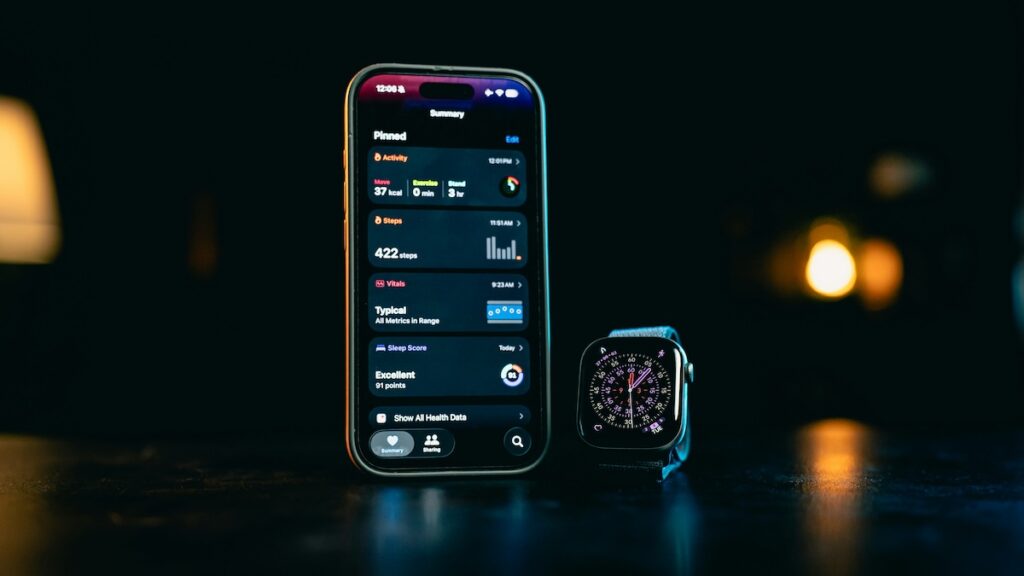
Wearable devices are now central to remote patient monitoring, chronic disease management, wellness programs, and clinical research. Integrating wearable data into a healthcare application introduces a category of technical challenge that doesn’t exist in standard software development.
The Multi-Provider Problem
Most healthcare apps need data from multiple wearable devices: Apple HealthKit, Google Health Connect, WHOOP, Oura, Garmin, Samsung Health, and others. Each has a different API, a different data schema, and its own authentication flow. Building and maintaining individual integrations with each is expensive.
A team integrating ten device platforms directly owns ten separate API relationships. Each provider updates on its own schedule. When a provider ships a breaking change, it becomes a maintenance incident for your team. Over time, the overhead scales in proportion to how many providers you’ve committed to supporting.
Open Source Wearables Infrastructure
Open Wearables is an open-source platform designed to address this problem. It provides a single unified API covering Apple Health, Google Health Connect, WHOOP, Oura, Garmin, Polar, Suunto, Samsung, Strava, and additional providers, normalizes the data into consistent schemas, and computes health scores (sleep quality, recovery, strain, HRV, VO2 max) using open algorithms you can audit and modify.
The platform is self-hosted with no per-user fees. You own the infrastructure, the data flows, and the algorithms. For developers integrating wearables into health applications, this approach reduces integration time from months to days and removes the ongoing maintenance overhead of individual provider APIs.
Health Data Interoperability With FHIR
A healthcare app that can’t share data with electronic health record (EHR) systems is becoming an increasingly untenable position. Patients and clinicians expect data to flow between systems. Regulatory frameworks in the US and EU are beginning to require it.
FHIR (Fast Healthcare Interoperability Resources) is the current standard for health data exchange. It defines a RESTful API specification for representing clinical data as structured resources: conditions, observations, medications, procedures, and patients. Understanding FHIR is necessary for any application that needs to read from or write to an EHR system.
What FHIR Enables in Practice
A FHIR-enabled application can read patient records from major EHR platforms like Epic, Cerner, and Athenahealth, write structured clinical observations back to a patient’s record, and participate in SMART on FHIR authorization flows where patients control which apps can access their data.
FHIR R4 is the current version to target. Most major EHR vendors support R4 endpoints for read access, with write support varying by vendor and endpoint type. Implementation requires mapping your internal data models to FHIR resource types, which demands familiarity with both the specification and the quirks of each vendor’s FHIR implementation. The FHIR and HL7 interoperability guide is a useful starting point.
The wearable data layer and the FHIR layer connect naturally. Observation resources in FHIR can represent step counts, heart rate, sleep duration, and other metrics that wearable platforms generate. An architecture that normalizes wearable data and then maps it to FHIR Observations creates a foundation that can support both clinical and consumer-facing products from the same data pipeline.
Working With a Healthcare Development Partner
Healthcare application development touches compliance, clinical workflows, EHR integration, and device connectivity at the same time. Teams without prior healthcare experience frequently underestimate how much the compliance groundwork shapes the rest of the development timeline, and how early those decisions need to be made.
There are two moments where working with a specialist changes outcomes most clearly. The first is architecture review before development starts, when there’s still room to get the infrastructure, access control model, and data schema right. The second is EHR integration, where vendor-specific FHIR implementation details and credentialing processes routinely extend timelines for teams without prior experience.
Momentum works with digital health companies on HIPAA-compliant application development, EHR integration, wearables infrastructure, and AI implementation. Teams building their first healthcare product benefit most from an early architecture review, before the decisions that compliance infrastructure depends on have already been made.
Checklist: Launching a Compliant Healthcare App
Before shipping, work through the following:
- BAA signed with every vendor that processes ePHI
- Encryption at rest on all storage (database, object storage, backups)
- TLS 1.2 or higher enforced on all connections
- Role-based access controls implemented and tested
- Audit logging active and tamper-evident
- Authentication uses unique user IDs; admin accounts require MFA
- Session timeouts configured
- Breach notification procedures documented
- Data retention policy aligned with HIPAA requirements (six years minimum for most records)
- Staff HIPAA training documented
- Penetration test scheduled
Compliance isn’t a state you reach once. It’s an ongoing operational practice. The HIPAA compliance guide for HealthTech CTOs covers the governance layer that sits above the technical implementation, including risk assessments and policy documentation. If, by way of comparison, you’d like to find out which widely available tools are HIPAA-compliant, you’ll certainly find the Is Zoom HIPAA Compliant? Your Guide to Healthcare Tech Stack Compliance post of interest.
Featured Image by Amanz on Unsplash
The post Building Healthcare Apps That Handle Patient Data Properly appeared first on noupe.